Barbados for First-Timers: Coasts, Money, Rules
Everything for a first visit to Barbados: west, south or east coast, how many days, the free online immigration and customs form, the 2 to 1 dollar peg, BDS$3.50 buses, taxis without meters, driving on the left and the camouflage ban.
By Barbados 365 Editorial Reviewed by Alex Borshch, Founder & Editor
Published November 16, 2026 · 9 min read
Barbados is one of the easier Caribbean islands for a first visit: English is the language, the roads and buses reach most of the island, and the US dollar is accepted almost everywhere. A few things still catch first-timers out, from the online entry form to the rule on camouflage clothing. This guide covers the decisions to make before you book and the practical details for the first day on the ground.
How the island is laid out
Barbados is compact, but the coasts feel very different.
- West coast (St James and St Peter): calm Caribbean water, the area around Holetown and Speightstown, with many of the island's upscale hotels and villas.
- Bridgetown (St Michael): the capital, the cruise port and the UNESCO-listed Historic Bridgetown and its Garrison.
- South coast (Christ Church): a lively strip, from Hastings and Worthing to St Lawrence Gap and Oistins, close to the airport.
- South east (St Philip): cliffs and coves around the Crane.
- East coast (St Joseph and St Andrew): Atlantic surf and the green hills of the Scotland District around Bathsheba.
- North: cliffs and quiet country in St Lucy.
All international flights land at Grantley Adams International Airport (BGI) in Christ Church, on the south side of the island.
Which coast to choose
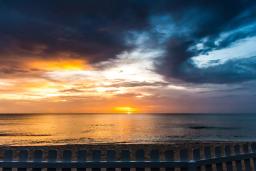
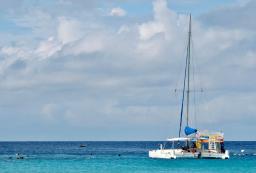
Most first-timers stay on the west or the south coast. Choose the west for calm swimming, snorkelling and sunsets, and the south for more restaurants, nightlife, a wider spread of prices and a short airport transfer. The east coast is beautiful but the sea there is mostly not for swimming, so it is better as a day trip or a quiet extra night. Our guide to where to stay in Barbados compares each area in detail.
How many days
Three days covers a beach, Bridgetown and one inland sight; follow our 3-day itinerary. Five days lets you add a turtle trip and the east coast (5-day itinerary). Consider a week, with time for rum, caves, gardens and a Friday at the fish fry; see the 7-day itinerary or, with children, the family version. For timing, read the best time to visit Barbados; the hurricane season normally runs from June to November.
The entry form
Every traveller must complete the online Immigration and Customs Form before arriving. The official site is travelform.gov.bb. According to Visit Barbados, the form becomes available 72 hours before your arrival, and the Immigration and Customs receipts are emailed to you, to be saved on your phone or printed and shown to officers on arrival. You need a valid email address, your passport and your flight details.
The form is free. WINAIR lists the Barbados ED form as free as of November 2026. CARICOM IMPACS has warned about fraudulent immigration-form websites targeting Barbados travellers. If a website asks for payment, close it. Our step-by-step guide to the immigration and customs form walks through each screen.
Visa rules depend on your passport. British visitors, for example, do not need a visa and are told on arrival how long they can stay, and their passport must be valid for the planned length of the stay. The Immigration Department page returned conflicting passport-validity wording during our check, including a six-month requirement. Confirm with Immigration and your airline. Check the rules for your nationality on our visa requirements page before you book.
Money and the dollar peg
The local currency is the Barbados dollar (BBD, written Bds$ or BDS$). It is fixed to the US dollar at two Barbados dollars to one US dollar, a peg the Central Bank of Barbados has held for decades. In practice, Visit Barbados notes that the US dollar typically exchanges at about Bds$1.98, slightly under the peg, while the official peg remains 2 to 1.
Major credit cards and US dollars are accepted island-wide, but ATMs dispense local currency only. Check whether a price is in BBD or USD before you pay, since a menu price of 40 means something very different in each. Carry small Barbados dollar notes and coins for buses, beach snacks and taxis. More detail is in our guide to Barbados currency and money.
Buses and taxis
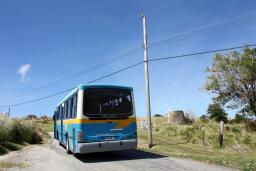
The government-owned Barbados Transport Board runs buses across the island, with main terminals in Bridgetown. As of November 2026 the fare is BDS$3.50 per trip, and you must put the exact fare in the farebox: no change is given. The Board is rolling out a cashless fare system in phases. Privately owned yellow minibuses with a blue stripe run selected routes for the same BDS$3.50, and white ZR vans with a maroon stripe cover their own numbered routes. Buses along the south and west coast roads are the easiest for visitors to use.
Taxis do not use meters. Fares are regulated by the government and there are standard fares for most destinations, but agree the price before you get in, and carry cash, since drivers do not always take cards. Many drivers also offer island tours at a flat rate. Our guide to getting around Barbados and the transportation page cover routes and airport transfers.
Driving on the left and the old visitor permit
Traffic drives on the left. Roads are narrow away from the main highways, signage can be thin in the countryside, and the roundabouts near Bridgetown get busy at rush hour.
A change many older guides miss: the Visitor Driving Permit was abolished when the Car Rental Levy took effect on 15 October 2025. As of November 2026, the Barbados Revenue Authority describes the levy as BBD $5.00 per day, up to a maximum of $35.00 per rental, collected by the rental company when you hire the car. You still need a valid driving licence; the Canadian government advises carrying an International Driving Permit if your licence is not in English. Ask your rental company what it requires.
Plugs and power
Visit Barbados gives the supply as 115/230 volts at 50 cycles, with plugs of two flat blades, some with a round grounding pin (Type A and B). Check your device's voltage and frequency rating and plug type, and ask your accommodation which adaptor or converter you may need. Ask your accommodation if one is provided in the room.
Tap water
Tap water is safe to drink. Visit Barbados describes the island's water as perfectly safe to drink from the tap, so a refillable bottle saves money and plastic.
Tipping
Look at the bill first. As of November 2026, Visit Barbados notes that gratuities of 10 to 15 percent are automatically added to the bill in many places. Where a service charge is included, extra tipping is optional. Where it is not, an additional tip is your choice. Ask your hotel which room charges apply.
The camouflage law
It is illegal for anyone in Barbados, including children, to wear camouflage clothing. The Canadian government adds that carrying items made of camouflage material is also an offence for civilians. Leave camouflage shorts, swimwear, caps and bags at home.
Safety basics
Barbados is a popular, well-visited island, but the UK government reports incidents of violent crime, including armed robbery, and an increase in gang-related murders involving guns, some in populated public areas. Take normal precautions: do not carry large amounts of cash or wear expensive-looking jewellery. In an emergency, dial 211 for police, 511 for an ambulance and 311 for the fire service. Read more in is Barbados safe and on our emergency contacts page.
Common first-timer mistakes
- Paying for the entry form on a lookalike site. The official form is free.
- Swimming on the east coast. The UK government advises that swimming is not recommended on many east-coast beaches because of strong currents. Strong currents can also affect south- and west-coast beaches. Follow local warnings and take care wherever you swim.
- Packing camouflage. It is against the law to wear it.
- Getting on the bus without the exact fare. No change is given.
- Not agreeing a taxi fare first. There are no meters.
- Confusing BBD and USD prices. Ask which currency a price is in.
- Doubling the tip. Check the bill for a service charge.
- Trying to see everything from one base in three days. Pick a coast and add one or two day trips. Our list of things to do in Barbados helps you choose, and local tips has more.
Frequently Asked Questions
Do I need to fill in a form before flying to Barbados?
Yes. All travellers must complete the online Immigration and Customs Form at travelform.gov.bb before arriving. It opens 72 hours before arrival, it is free, and you show the emailed receipts, on your phone or printed, to Immigration and Customs when you land.
Can I use US dollars in Barbados?
Yes. Major credit cards and US dollars are accepted island-wide, and the Barbados dollar is fixed at two to one US dollar. ATMs give local currency only, so expect change in Barbados dollars too.
Do I still need a visitor driving permit to drive in Barbados?
No. The Visitor Driving Permit was abolished when the Car Rental Levy took effect on 15 October 2025. As of November 2026 the rental company collects a levy of BBD $5.00 per day, up to $35.00 per rental. You still need a valid driving licence.
How much is the bus in Barbados?
As of November 2026, the Transport Board fare is BDS$3.50 per trip, paid with the exact amount because no change is given. Yellow minibuses charge the same fare.
Is it illegal to wear camouflage in Barbados?
Yes. It is illegal for anyone, including children, to wear camouflage clothing in Barbados. Leave any camouflage items at home.
Can you drink the tap water in Barbados?
Yes. Visit Barbados describes the tap water as perfectly safe to drink.